Skateboarding • Recovery • Long Read
He was the most famous skateboarder on the planet at seventeen. Then the cameras stopped rolling — and the drinking started. This is the full, unfiltered story of how Ryan Sheckler lost everything to alcohol, fought back twice, and is now living proof that the hardest trick you’ll ever land has nothing to do with a board.
By The Sober Standard
I didn’t grow up skateboarding. But I grew up watching Ryan Sheckler, which was not the same thing, and in 2007 that distinction barely mattered to anyone. He was everywhere — Life of Ryan on MTV, energy drink billboards, the X Games podium, the kind of face that colonised the bedroom walls of an entire generation. He seemed to exist in a state of perpetual, effortless cool: this lean, grinning California kid who could make a kickflip over a gap the size of a small building look like he was thinking about something else entirely.
What I didn’t understand then — what almost nobody understood — was that the kid on those billboards was already hollowing out. That the smile had started to require chemical assistance. That by the time he was flying to contests around the world, there were moments on foreign soil — Oslo, specifically, by his own account — where he didn’t want to be Ryan Sheckler anymore. Didn’t want to be a professional skateboarder. Didn’t want to be in the public eye at all. Just wanted it to stop.
This piece is about what it took to stop. Not the drinking — the hiding. Because Ryan Sheckler’s story isn’t simply a celebrity-gets-sober narrative, though it is certainly that. It’s a story about what happens when the thing that’s supposed to be your identity becomes the very thing you’re running from, and what the road back looks like when you’ve already run a long way.
He found it. It took him almost a decade. It cost him more than he’s ever fully catalogued publicly. And what he’s built on the other side of it — as a husband, a father, a skateboarder at thirty-six who’s still producing video parts that make younger pros nervous — is one of the most complete recovery stories action sports has ever produced.
It deserves to be told in full.
The Boy on the Board
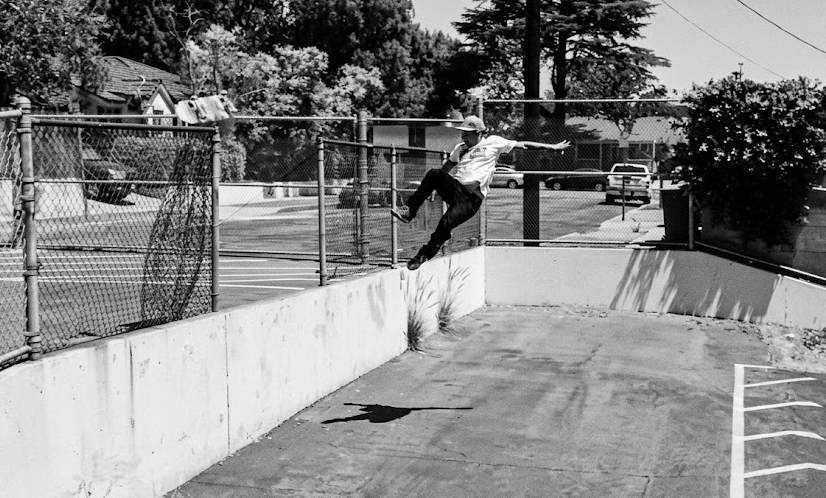
Ryan Allen Sheckler was born on December 30, 1989, in San Clemente, California. He found his father’s skateboard at eighteen months old and taught himself to push it around on one knee. He won his first contest at six. By seven, Etnies skate shoes had given him his first sponsorship. By thirteen, he was a professional — the youngest X Games gold medalist in history, competing against men nearly a decade his senior and beating them with a combination of technical precision and a physical fearlessness that bordered on the pathological.
That last quality matters. Sheckler has, over the course of his career, broken his back, his left foot, his left ankle, his right ankle twice, his left elbow four times, his right elbow three times, torn ligaments in both feet, torn both MCLs, torn an ACL, and sustained more concussions than he can accurately count. As he told Men’s Journal in 2023: “I couldn’t tell you how many times I’ve hit concrete from over 10 feet high. It could be close to a million times.”
He doesn’t say this to perform toughness. He says it to explain what skateboarding demands — a willingness to absorb punishment in the pursuit of something that most people watching will never fully understand. That same all-or-nothing neurological wiring, that same inability to process the word “enough,” would eventually find another outlet. One that didn’t leave marks you could show people.
For now, though, he was just a kid who could do things on a skateboard that other kids couldn’t, and the world was extremely interested in that fact.
In 2007, Ryan Sheckler was seventeen years old when Life of Ryan premiered on MTV. The show followed him through the rhythms of being a teenage professional athlete — the competitions, the sponsorships, the relationships, the complicated family dynamics after his parents’ separation — and it gave him something that most professional skateboarders, even the very best ones, never get: mainstream cultural visibility.
It also put a camera in his face at the exact developmental moment when most teenagers are figuring out who they are in private.
The Weight of Being “Ryan Sheckler”
Here is what the television version of Life of Ryan couldn’t fully capture, and what Sheckler has spent the better part of a decade explaining in various interviews: the show didn’t just document his life. It produced a character called “Ryan Sheckler” that was distinct from the actual person, and then released that character into the world, where the skateboarding community — his community, the people whose respect he wanted more than anything — turned on it.
“The hate started coming in from my peers that I respected, and they were talking behind my back,” he told E! News in 2023. “I was just an easy target.”
This is the part of the story that gets glossed over in most retellings, and it shouldn’t be. Sheckler wasn’t just a young athlete dealing with the normal pressures of public life. He was a kid who had built his entire identity around skateboarding — around the culture, the community, the craft — watching that same community reject him for becoming too visible, too commercial, too mainstream. The accusation was “sellout,” which in skateboarding carries a moral weight it doesn’t quite carry in other sports. It hit him somewhere real.
He responded the way he responded to everything: he skated harder. “Honestly, it fuelled me to skate harder and do more ridiculous things.” But you can only skate so hard for so long, and what he couldn’t outskate was the question of who he actually was when the cameras weren’t rolling.
Life of Ryan ended in 2009. He was nineteen. And that was when, as he put it to Tarzana Treatment Centers in a widely shared interview, he began drinking “to escape the sense of loss and emptiness in his life.”
That loss is worth sitting with for a moment. Not the loss of fame — he remained one of the most recognisable names in skateboarding throughout his twenties. But the loss of shape. The show had given his days structure, purpose, an external narrative to inhabit. When it ended, he was left with the oldest problem in the entertainment industry: the person the cameras made you versus the person you actually need to become. Most people in that situation are at least in their thirties before they have to confront it. Sheckler was nineteen, with more money than he knew what to do with and a skateboarding culture that had formally rejected the version of him it had watched on television.
Jack Daniels was, as he later put it, “just all bad news.” But it was accessible. And it worked — for a while.
The Architecture of an Addiction
Ryan Sheckler has never been coy about the mechanics of how it happened. Across a series of candid interviews — with Graham Bensinger, with E! News, with ESPN’s X Games, with the Jesus Calling podcast — he’s built a remarkably clear picture of how a young man with exceptional talent and a genuinely good heart managed to spend the better part of a decade functionally destroying himself.
The psychological engine of it was, in retrospect, almost textbook. He describes becoming a compulsive caretaker — someone who structured his entire emotional life around solving other people’s problems because his own were easier to ignore that way. “I ended up wanting to take care of everybody around me. Everybody around me was way more important than myself. I never took the time to care about myself because what I thought made me happy was taking care of other people, trying to be a problem solver.”
When you take on that much of other people’s weight, he explained, and you can’t deal with your own, “it’s a recipe for disaster. That’s exactly where I was. Then you add Jack Daniels to the equation, and it’s just all bad news.”
His athletic body started deteriorating in ways that should have been warning signs. The inflammation from drinking made his injuries take dramatically longer to heal — he’s explicit about this correlation when he speaks about it. He was eating fast food, not hydrating, not sleeping properly, and then expecting a body he was actively undermining to perform at elite level. “You can’t have both,” as he told Yahoo Life in 2023. He was pretty ignorant to that fact at the time, or perhaps more accurately: he knew, and he kept going anyway.
That’s the nature of it. The brain of someone in active addiction, as he described with unusual precision to the Jesus Calling podcast, doesn’t run the cost-benefit analysis. “When you’re in that state, your brain does this weird thing where it won’t even allow you to have the chance to say no. It’s not even a thing, like, You shouldn’t have a drink. But my brain’s not doing the whole thing of like, ‘Well, let’s break it down. Here’s the pros. Here’s the cons.’ You don’t do that without an alcoholic mind.”
He had great friends around him, he stresses. He wasn’t abandoned. But great friends, as anyone who has been through this knows, cannot do the internal work for you. They can witness. They can love. They cannot make the decision. And for years, Ryan Sheckler couldn’t make the decision either — not because he didn’t want to, but because the part of his brain that was supposed to help him make that call had already been recruited to the other team.
He was in Oslo for a skateboarding event when it crystallised in the starkest terms. “I remember being in Oslo and not wanting anything to do with skateboarding,” he told SurferToday. “I didn’t want to be in the public’s eye anymore at all.”The thing he had built his entire life around had become background noise to the thing that was slowly consuming him.
2016: Asking for Help
The first real turning point came in 2016, when Ryan Sheckler was twenty-six years old. He reached out to the person he had always been able to reach: his mother.
The specific dynamics of that conversation haven’t been extensively documented publicly, but its significance in his own telling of the story is unmistakable. His mother had been his constant — co-starring in Life of Ryan, managing the logistics of an extraordinary early career, serving as a stabilising force through the chaos that television fame accelerated. When the drinking had become something he could no longer manage alone, she was the person he called.
He entered rehab. He got sober. And for the next four years, he stayed that way — rebuilding his athletic body, rediscovering his relationship with skateboarding, slowly unpacking the emotional architecture that had made alcohol feel necessary in the first place.
He was, as he described after around eighteen months of sobriety to ESPN’s X Games, genuinely finding his way back to himself. “I’m 27 years old and I’m getting more flexible, stronger and smarter. It gives me chills because I love it so much. I get into my park and I’ll start skating, then I’ll look at the clock and three hours passed. My body is ready for anything.”
He was also, crucially, learning to let go of the hectic energy that had always been his default mode. “I used to say it all the time, that I liked the hectic energy. Well if you like hectic energy, you’re always talking about it, you’re always going out aggressive, talking about fights and things like that, guess what you’re going to find? Fights and the hectic energy that just cause nothing but pain. So I stopped looking for that hectic energy.”
He lost friends in the process. He’s entirely at peace with that. “The people that did not care about my well-being or me succeeding are out of my life.”
This is a pattern that shows up across the recovery stories we’ve covered at The Sober Standard — from Tom Holland’s accidental road to sobriety to John Goodman’s eighteen-year relationship with the twelve-step model. The social contraction of early sobriety — the friendships that dissolve, the circles that shrink — is almost universally described not as loss but as clarification. As the removal of static that was always present but never identified as static until the quieter signal became possible.
For Sheckler, the signal was his love of skateboarding. Stripped of the noise, it was still there.
The Relapse, and the Return
On his thirtieth birthday, Ryan Sheckler made a mistake that a significant number of people in recovery make at some point: he decided he had it beat.
Four years sober, healthier than he’d been in years, in a life that had restructured itself around clarity — he allowed himself to think the thought that is perhaps the most dangerous thought in all of recovery. “Maybe I got this. Maybe I can drink normally.”
He told SurferToday: “It was my 30th birthday, and I had taken so much time off of drinking that I was like: ‘Maybe I got this; maybe I can drink normally.’”
He couldn’t. For five months in 2020, he drank again. And then, as he told E! News, he made the decision that would prove permanent: “Being sober is the best decision that I made for my life. There’s no checking out. I have to deal with these emotions that come up, and that’s where the power is.”
March 30, 2020 became his sobriety date. The date he has held since.
It is worth pausing on this moment, because the recovery world sometimes treats relapse as a mark against the story’s value — as evidence that the first attempt didn’t count, or that the person isn’t serious, or that the narrative is less clean than it might be. This is one of the most damaging misconceptions in addiction treatment. We’ve written about this directly at The Sober Standard: relapse is a common feature of the recovery landscape, not a disqualification from it. The research consistently shows that long-term recovery often involves setbacks on the way to durable sobriety. What matters is not the fall. It’s what you build after you get back up.
What Sheckler built after March 30, 2020 is, by any measure, extraordinary.
Rolling Away: The Document He Always Needed to Make
By 2021, Ryan Sheckler was sober, remarried to his relationship with skateboarding, and deep in the planning stages of something he’d been resisting for years: a documentary.
His resistance was specific and worth naming. “I always saw documentaries as these things that signal you’re on your way out,” he told Men’s Journal in 2023. He wasn’t ready to be eulogised. He wasn’t finished.
What changed the shape of the project was, appropriately, a catastrophic injury. Three months into filming what was supposed to be a celebration of his return to elite-level skateboarding, he tore his ACL. It required surgery and what he described as a “year of gnarly recovery.” He gained twenty pounds of muscle during the rehab process. He deepened a nascent relationship with Christianity, eventually describing himself as a born-again Christian. And he spent time with a woman named Abigail Baloun — now his wife — at the start of their relationship in a way that his previous life would never have allowed.
“I had the goal in mind that I’m coming back no matter what, I’m going to finish this project,” he said. “And I’m actually happy about the injury. I learned a lot. That was a chance for me to grow spiritually, mentally, and physically.”
The documentary that eventually became Rolling Away — released on Red Bull TV on July 28, 2023, alongside a video part called Lifer — reflects this broader ambition. It’s not a film about a man’s best tricks, though it contains some extraordinary footage. It’s a film about what it costs to commit completely to something, and what you find on the other side of the cost. Tony Hawk, Eric Koston, and Torey Pudwill feature alongside Sheckler, lending the project a generational weight that underscores its subject: what does it mean to be a “lifer” in an activity that was supposed to be youth culture?
Sheckler’s answer, delivered through the footage and the honesty of the interviews within it, is essentially: it means carrying the weight of your whole story, not just the highlight reel.
In his E! News interview around the film’s release, he addressed the addiction timeline directly: “I got caught up for years and it became unmanageable. My passion for skateboarding was overtaken by my desire to drink.” But he was equally clear about where the blame sat: “I blame my drinking on myself. The show’s not responsible for that. It was me.”
That last sentence matters. Accountability without self-destruction is one of the hardest postures in recovery to hold. It’s the thing John Mayer was reaching for when he described sobriety as a “graduation” rather than a rock-bottom story. It’s the thing that makes Sheckler’s telling of his own story feel genuinely useful rather than simply cathartic — he’s not performing remorse. He’s describing a process he understands.
Olive, Lilah, and the Real Reason Any of It Matters
In November 2021, Ryan Sheckler proposed to Abigail Baloun. On March 3, 2022, they got married after a ninety-day engagement. Exactly one year later — March 3, 2023 — their daughter Olive Oleta was born. Their second daughter, Lilah Fox, arrived on July 8, 2024.
The first time Sheckler talks about fatherhood in interviews, something shifts in his register. The practised clarity of a man who has learned to talk about his recovery — the careful language, the measured acknowledgments — gives way to something else. Something less managed.
He told Men’s Health Australia: “Next year, I’ll have a baby. So that’s super rad. I’m trying to get the house ready for all of that and make sure the wife is happy and eating right and hydrating, doing what she needs to be doing. And you know, just staying on top of my program, staying on top of my connection with the grace of God, and I’m just really ready for pretty much ready for anything that comes my way.”
That phrase — staying on top of my program — is significant. It’s recovery language. It’s the language of someone who knows, having been through what he’s been through, that the work doesn’t end when the wedding happens or the baby arrives. If anything, those moments raise the stakes. The things you now stand to lose are not abstract.
Near six years sober as of this writing, Sheckler told TMZ Sports in October 2025 with a clarity that lands differently when you know the full story: “I wasn’t just hurting myself. I was hurting the people around me. I think once I took a grasp to, like, I’m hurting people that really care about me, I couldn’t deal with it anymore.”
This is the conversion point that doesn’t always get its due in recovery narratives. The shift from I need to stop for myselfto I need to stop for the people I love is not a lesser motivation — it’s often the one that actually sticks. The research on recovery durability consistently shows that relational stakes — the people watching you, needing you, counting on you — are among the strongest protective factors against relapse. It’s not that sobriety becomes about other people instead of you. It’s that the circle of the self expands, and the consequences of a drink stop being private.
For Sheckler, that expansion ran through his mother first, then through Abigail, and now through two daughters who will grow up watching their father live an examined life. If Life of Ryan was the television show that was made about him without his full understanding of what it would cost, the life he’s building now is the documentary he chose to film — with no director, no producer, and no MTV executives in the room.
Nearly Six Years Sober, Skating Better Than Ever
In October 2025, Ryan Sheckler was at LAX, heading to Paris to skate. He told TMZ Sports that he had thought he was done competing. He had been wrong.
“I’m skating better than ever right now.”
He was thirty-five years old. He had broken essentially every major joint in his body at least once. He had been to rehab. He had relapsed. He had found his way back. He had married, fathered two children, deepened a faith he credits substantially with keeping him grounded, launched his own skateboard brand (Sandlot Times), and continued running the Sheckler Foundation — a philanthropy he started at seventeen that has now been operating for nearly two decades, donating to adaptive athletes, children’s hospitals, and school programmes across the country.
And he was heading to Paris to skate.
The “skating better than ever” claim is not nostalgia. It has a physiological basis that Sheckler articulates precisely: sobriety improved the quality of his movement. “I had a drinking problem, I had a pretty bad drinking problem. And that added to my inflammation, that added to injuries taking way longer to heal than they should.” When you remove the thing that was creating systemic inflammation, disrupting sleep, degrading nutrition habits, and compromising neuromuscular coordination, a body that has been training for thirty-plus years can sometimes do surprising things.
His strength and conditioning coach, John Welch, has worked with him through both the injury recoveries and the sobriety: “I’ve always been impressed with Ryan’s work ethic. He’s always giving himself incredible structure and sticks to the plan.”
Structure. That word keeps appearing in Sheckler’s story, and it’s worth noticing. The addiction took hold during a period of absent structure — after the show ended, after the neat narrative of his early career dissolved, after the community that was supposed to give him belonging turned away. The recovery has been, among other things, the construction of a new architecture for his days: faith, family, training, foundation work, skating. Things that pull him out of his own head and into something larger than the immediate moment.
This is not a complicated formula. But it is a complete one.
What Action Sports Does to You (And What You Can Do About It)
There is a conversation that action sports has never quite managed to have publicly, and Ryan Sheckler’s story is perhaps the most prominent invitation to have it.
Skateboarding, surfing, snowboarding, BMX — these sports select for people with a specific neurological profile. High sensation-seeking. High pain tolerance. Low inhibition. A willingness to attempt things that the rational risk-assessment module of the brain would normally veto. These are exactly the qualities that produce the footage that makes these sports spectacular to watch. They are also, without appropriate structure and support, exactly the qualities that make substance misuse more likely.
The skate world has historically dealt with this by not dealing with it — by treating substance use as part of the lifestyle, as authentic, as the price of admission to a culture that prides itself on existing outside mainstream norms. Some of the most celebrated figures in skateboarding history have had complicated relationships with alcohol and drugs that were treated as character rather than pathology.
Sheckler’s story disrupts that framework not by moralising about it, but simply by being honest about what it cost him. He lost years. He lost his joy for the thing he was supposed to love. He lost the thread of himself. And he found his way back — not through willpower alone, not through any single intervention, but through a combination of asking for help, doing the internal work, building relational stakes, and staying on his program one day at a time.
If you’re reading this and you’re in the world of action sports — or you love someone who is — the understanding addiction resources at Sober Standard are a practical place to start. The specific cocktail of factors that makes extreme athletes vulnerable to addiction doesn’t make recovery impossible. It makes it specific. Knowing the mechanism matters.
The Interviews That Tell the Full Story
Ryan Sheckler has not been quiet about his recovery. What follows are the primary sources — the interviews and documentary that form the core record of what he’s been through, referenced throughout this piece, and worth watching in full.
Rolling Away — Red Bull TV, July 28, 2023: The documentary that brought his full story to the widest audience. Watch this first.
In Depth with Graham Bensinger: The most forensic account of the relapse, the moderation attempt, and the return to sobriety. Bensinger asks the questions other interviewers skip.
Hawk vs. Wolf Podcast with Tony Hawk and Jason Ellis, August 2023: Three men who go way back, talking honestly about what the industry asks of the people inside it.
Jesus Calling Podcast: Sheckler on faith, addiction, and the specific moment he understood he was powerless without something larger than himself.
E! News, July 2023: The launch interview for Rolling Away. The quote about passion being overtaken by the desire to drink is in here, and it should be read in full.
The Thing He Said That Changed the Frame
There is a line in Ryan Sheckler’s recovery narrative that I keep returning to, and I want to close with it because I think it does something specific that most recovery language doesn’t.
In his interview with ESPN’s X Games, speaking about what sobriety had given back to him athletically and personally, he said: “My body is ready for anything. Not just skateboarding, just life in general. Whatever gets thrown at me, I’m ready for it. It’s a powerful feeling.”
That’s not the language of someone who feels fixed. It’s the language of someone who has accepted that life will keep throwing things, and who has built a body and a life that can receive them. The science-backed healing timeline of sobriety is real, and Sheckler has lived through it — the physical recovery, the emotional recalibration, the slow rebuilding of a nervous system that was using alcohol as a crutch. None of it happens overnight. All of it eventually shows up in the body and in the life.
He is in Paris skating. He has two daughters. He runs a foundation that has donated millions to people who need it. He is nearly six years sober. He is skating better than he was in his twenties.
He is also, by his own account, finally — after all of it — in love with the thing he was supposed to love all along. Not performing love for the cameras. Actually feeling it.
That is what the other side of a decade of alcohol addiction looks like when the work is done. Not a perfect life — there is no such thing, and Sheckler would be the first to say so. But a present one. A chosen one. A life in which, when you look at the clock three hours into a session at your private skatepark, you have no idea where the time went — because for the first time in years, you actually wanted to be there.
If Ryan Sheckler’s story resonates with you personally, you are not alone, and you don’t have to figure out the next step by yourself. Start with our five-step guide to beginning your sobriety journey, take our free alcohol use assessment to understand your relationship with drinking, or use our addiction treatment directory to find professional support in your area. The door is always open.
For more long-reads at the intersection of sport, culture, and recovery, explore the full archive at soberstandard.com.
Key Facts: Ryan Sheckler’s Recovery Timeline
| Year | Event |
|---|---|
| 1989 | Born in San Clemente, California |
| 2003 | Becomes youngest X Games gold medalist at 13 |
| 2007 | Life of Ryan premieres on MTV; skateboarding community backlash begins |
| 2009 | Show ends; drinking escalates to cope with identity loss |
| 2016 | Checks into rehab; gets sober for the first time |
| 2020 | Brief relapse on 30th birthday; achieves lasting sobriety March 30, 2020 |
| 2022 | Marries Abigail Baloun |
| 2023 | Daughter Olive born; Rolling Away documentary released |
| 2024 | Second daughter Lilah born |
| 2025 | Nearly six years sober; “skating better than ever” |
Disclaimer: The content on this page is for informational purposes only and does not constitute professional medical, psychological, or addiction treatment advice. If you are struggling with alcohol use disorder, please consult a qualified healthcare provider or contact a professional treatment service.

Author: Carter Davies
Music, Travel and Sobriety writer for Sober Standard. More articles can be found here and on X https://soberstandard.com/profile/carter-davies/