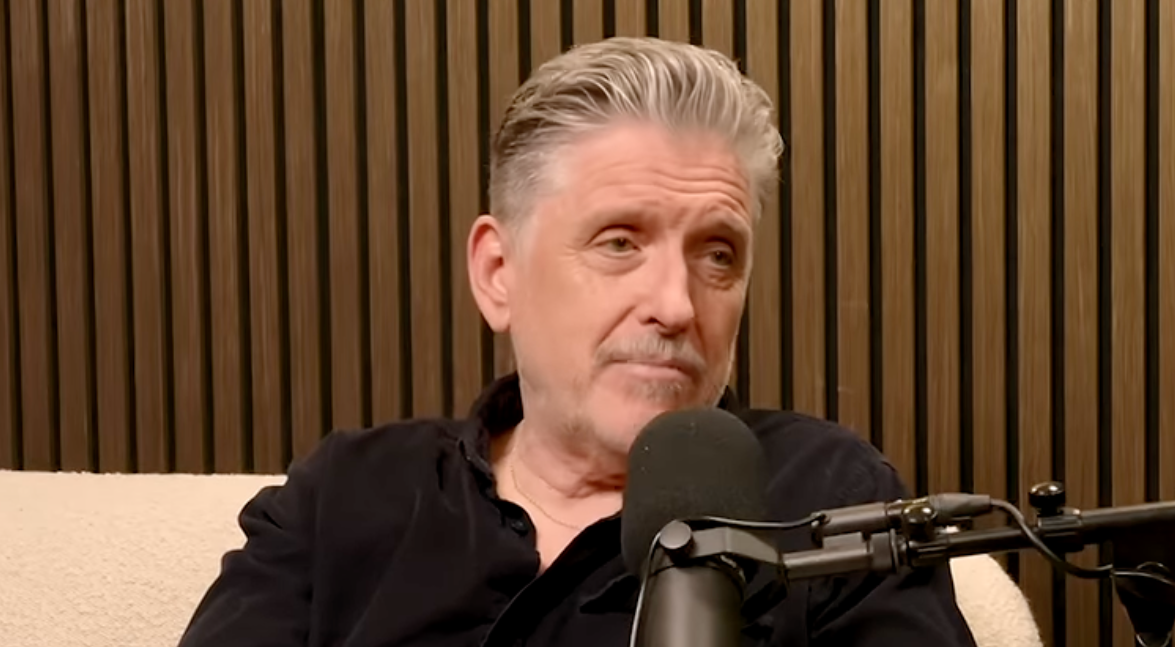
Some people can tell a story, some people have a great story, few tend to have both. Craig Ferguson is someone who has both.
In a culture that often sanitizes addiction into vague clinical jargon or softens it with endless external rationalizations, Ferguson does something far rarer: he strips away the self-pity and demands total, unsparing self-ownership.
The Jekyll and Hyde Paradox
Before reaching clarity, there is the delusion. Ferguson recounts waking up in a London pub one Christmas morning, crushed by a profound spiritual hangover and casually deciding his only logical move was to jump off Tower Bridge. What derailed the attempt wasn’t an epiphany—it was a pint glass of sherry handed to him by a bartender for a holiday toast (1:42).
The urge vanished instantly, exposing the core trap of chemical dependence:
“The potion that turned him into Mr. Hyde is the only thing that will turn him into Henry Jekyll again… The only thing that made me feel normal was the thing that was killing me.” (2:57)
Breaking free from that loop requires understanding the biological mechanisms of the quit alcohol timeline and recognizing that the substance offering relief is the exact mechanism manufacturing the misery.
“Willing to Be the Villain of Your Own Story”
The turning point in recovery rarely comes from realizing how deeply you have been hurt. It comes when you admit how much damage you actively caused.
At the five-minute mark of the interview, Ferguson cuts straight to the quiet truth that modern self-help often avoids:
“Alcoholics of my type in recovery… they’re willing to be the villain of their own story. And I think that’s very important. So you look at yourself and you go, ‘Who was at fault there? Me. I was a dick there. I need to not be that. I need to change.’” (5:05)
He draws a clean, necessary boundary between circumstance and behavior:
“It’s tempting when bad things have happened to you to say, ‘Well, it was all that.’ And certainly that wasn’t your fault. If bad things happened to you, it’s not your fault. But there are other times that maybe a bad thing happened to you and then you did a bad thing—and that is your fault. The bad thing that you did is your fault.“ (5:30)
Radical Agency as the Only Way Out
This distinction is the cornerstone of genuine milestones in recovery. If your wreckage was entirely someone else’s fault, you remain entirely powerless to change the trajectory. By accepting that your actions, betrayals, and failures belonged completely to you, you reclaim the power to rewrite what comes next.
Whether through the structured inventories of 12-step programs, the cognitive accountability of Rational Recovery and AVRT, or the uncompromising discipline embodied by figures like Henry Rollins, the baseline never changes:
“The first drink is the one that does the damage. After that, someone else is driving. But if I can avoid the first drink, I can avoid every drink.” (8:28)
Owning your wreckage is not about wallowing in shame. It is about taking the steering wheel back for good.

Author: Carter Davies
Music, Travel and Sobriety writer for Sober Standard. More articles can be found here and on X https://soberstandard.com/profile/carter-davies/