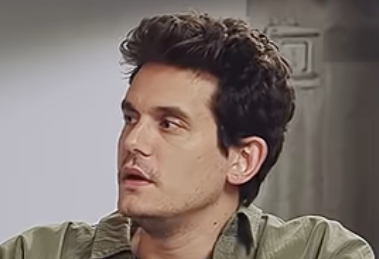
The 40% Tax:
John Mayer’s Logical Path to Sobriety
He didn’t hit rock bottom. He did the math. And that might be the most radical thing anyone has ever said out loud about quitting drinking.
October 23, 2016. Drake’s 30th birthday party. The guest list reads like a Hollywood fever dream — Taylor Swift, Katy Perry, Jamie Foxx — and somewhere in the middle of it, John Mayer is getting very, very drunk. Not “I had a few too many” drunk. Six-days-of-hangover drunk. The kind that leaves you on a couch days later, staring at the ceiling, genuinely unsure when your body is going to return to baseline.
Most people know a night like that. The specifics change — it’s not always a famous rapper’s birthday party — but the morning after, and the morning after the morning after, has a universal quality. The bargaining. The inventory. The quiet, creeping question: what exactly am I doing here?
What most people don’t do, on day six of a hangover, is sit down and conduct a formal performance audit of their own life and come out the other side with a clean mathematical answer. John Mayer did. And the way he talks about what happened next — in a now-legendary cover story interview with Complex, and in various conversations since — is unlike almost anything else in the public record of how a person decides to stop drinking. It doesn’t sound like a confession. It doesn’t sound like a rock-bottom story. It sounds like someone who cracked open a spreadsheet and didn’t like the numbers.
That’s what makes it worth sitting with. Not just as a celebrity sobriety story — we have plenty of those — but as a genuinely different framework for why and how someone walks away from alcohol. A framework that, for a specific kind of person, lands differently than anything traditional recovery has ever offered.
The interview that set all of this in motion: “John Mayer on Quitting Alcohol” — and the follow-up, “I’m Done With Alcohol”. Watch them both before you read a single word further. They change the texture of everything below.
The Audit
On day six of that hangover, sitting by a window, Mayer did something that he describes with almost eerie clarity. He asked himself a question — not in the language of addiction, not in the language of failure or shame or willpower — but in the language of a man who had, perhaps for the first time, decided to be honest about what was actually on the table.
“I looked out the window and I went: ‘Okay John, what percentage of your potential would you like to have? Because if you say you’d like 60, and you’d like to spend the other 40 having fun, that’s fine. But what percentage of what is available to you would you like to make happen? There’s no wrong answer. What is it?’ And I went: ‘100.’” — John Mayer, Complex Magazine, 2018
That’s it. That’s the whole moment. No intervention. No breakdown. No dramatic consequence. Just a man asking himself what percentage of his own life he wanted to actually show up for — and answering honestly.
The reason this lands so hard for a certain type of person is that it removes the moral framework entirely. There’s no shame in the question. There’s no judgment implied. If you genuinely decide that 60% of your potential is enough and the other 40% goes to the enjoyment of drinking, Mayer is saying explicitly: that’s a legitimate answer. He’s not telling you you’re wrong to drink. He’s asking you to be clear-eyed about what you’re trading and whether the trade is working for you.
For people who have spent years in an exhausting on-off relationship with alcohol — who’ve tried the willpower approach, the moderation approach, the “I’ll only drink on weekends” approach — this reframing feels like a window being thrown open. Because the thing that makes drinking so hard to examine isn’t the physical pull. It’s the cultural insistence that you’re either fine or you’re an alcoholic, and since most people don’t identify with the latter, they conclude they must be the former and stop looking. Mayer’s question skips that binary entirely. It just asks: what are you paying, and is it worth it?
Drinking as a Con
One of the most striking things in the extended record of Mayer’s public comments about alcohol is how consistently he returns to the language of fraud. Not tragedy. Not disease. Con artistry.
“Drinking is a f—ing con,” he told podcast host Dean Delray. “How much is enough? Every time I drank, I was looking for some sort of regulated amount. It always feels wrong for me. I always feel like I went overboard. There’s never an amount that felt like I was succeeding at life. It always felt wrong.”
The con framework matters. A con isn’t something that defeats you by being stronger than you. A con defeats you by making you believe something false. And the specific false belief that alcohol sells — which Mayer names as clearly as anyone has — is that there is a correct amount, a regulated dose, a version of drinking that feels finished and satisfied and right. The con is that the “correct amount” is always just one more than you’ve had, and you keep paying into it looking for a settlement that never comes.
This is the mechanism that we’ve explored at length on The Sober Standard — the way alcohol promises resolution and delivers escalation, every single time, for people wired a certain way. Mayer didn’t need a clinical framework to arrive there. He just looked at the pattern honestly and named what he saw.
And once you name the con for what it is, you don’t need willpower to walk away from it. You’ve just seen through the trick. As Mayer puts it, framing it in terms of pure logic: if you ever find yourself wanting a drink again, you’ve simply “tallied up the pros and cons wrong.” Sobriety stops being a test of strength and becomes a simple correction of a factual error.
The Mayer Framework at a Glance
The Question: What percentage of your potential do you want to access? If the answer is 100, alcohol is costing you the gap between where you are and where you could be.
The Con: Drinking promises a regulated “correct amount” that never arrives. Once you see the mechanism, you don’t need willpower to stop — you’ve simply stopped believing the premise.
The Line: Early sobriety feels like boredom — the removal of artificial highs. But the baseline doesn’t stay flat. With work, it rises. The whole line goes up.
The Label: Not “alcoholic.” Not “in recovery.” Just someone who “did it, it helped for a while, and then it stopped being awesome.” A graduation, not a sentence.
The Boredom Problem — and What’s on the Other Side of It
Here is where Mayer’s account gets genuinely useful in ways that most sobriety narratives skip entirely. He doesn’t promise that stopping drinking feels good immediately. In fact, he says the opposite.
“The level feels like boredom at first. But if you stick with it, the line straightens out and it goes kind of low. You’re like, ‘Oh, I’m not having these high highs.’ But if you work, you can bring the whole line up.” — John Mayer, Complex Magazine, 2018
This is one of the most honest descriptions of early sobriety you’ll find anywhere — and it’s coming not from a clinician but from a musician who has lived it. The “boredom” he’s describing has a neurological basis: when alcohol is removed, the brain’s reward circuitry, long accustomed to artificial dopamine stimulation, takes time to recalibrate. Normal pleasures — music, conversation, food, a good morning — temporarily lose some of their signal. The highs feel less high because they were never meant to compete with a chemical shortcut.
This is the neuroplasticity argument, and it’s one of the most important things anyone considering sobriety can understand upfront. The flatness isn’t permanent. It’s the brain resetting. And what Mayer describes on the other side of it — the line gradually straightening out, then rising — is exactly what the science predicts and what thousands of people report. You don’t miss the highs because the baseline has become high enough that you don’t need them.
“I have so many more records,” he told Complex. “I just figured out how to make them without going crazy.” That’s the other side of the line going up: not just feeling better, but being able to do more. The year after he quit, he did four tours, was in two bands, and released a new album. Not despite being sober. Because of it.
The Air Bridge
One of the most quietly radical things Mayer has said about sobriety gets less attention than the potential-percentage quote, but in many ways it’s the more interesting observation. In discussing how his social life changed without alcohol, he named something that most people feel but rarely articulate.
“I realized that alcohol was the air bridge, as they say now, between two strangers.” — John Mayer, on sobriety and social connection
The air bridge metaphor — borrowed from aviation, the enclosed walkway between a terminal and a plane — is perfect for what alcohol does socially. It creates a temporary, artificial connection between two people who haven’t yet figured out whether they actually want to be connected. It lowers the perceived social stakes just enough to get the conversation started. The problem, as Mayer found, is that once you’ve been relying on the air bridge long enough, you forget how to board the plane without it.
He talked about this directly in a conversation on Alex Cooper’s Call Her Daddy podcast, where he explained that without liquid courage, his approach to dating and meeting people changed entirely. “You have to be glaringly honest,” he said. “Here’s who I am. Here’s what I like. Here’s what makes me nervous.” No air bridge means no shortcut to false intimacy. What you get instead is the real thing — slower, sometimes more uncomfortable, but actually yours.
This is one of the subtle losses that people fear when they think about giving up drinking — not the drink itself, but the social ease it provided. Mayer names it, doesn’t minimize it, and then explains what happens when you stop outsourcing that ease to a substance: you develop the actual capacity for it yourself. The bridge comes down. You build legs instead.
The Label Problem
Perhaps the single most significant barrier between many people and an honest examination of their relationship with alcohol is the label problem. The word “alcoholic” carries an enormous weight — clinical, moral, social — and for many people whose drinking is causing real harm but doesn’t match the most severe stereotype, the label creates an exit from honest self-examination. I’m not that bad. So I must be fine.
Mayer is unusually direct about his discomfort with the binary. He has said explicitly that he doesn’t want to use the word “sobriety” — not because he’s ashamed of his choice, but because the language around drinking, as he put it, can become a cage of its own. He told Billboard at his two-year mark that he preferred to say he “hadn’t had a drink in two years” rather than leaning on recovery-coded language.
He described the fuller logic of his position in a way that opens a door for a lot of people who’ve felt locked out of the sobriety conversation:
“I think there are some shades in between that go: ‘I didn’t for a long time, I did it, it helped me, it was awesome, and then it stopped being awesome and I didn’t want to do it anymore.’” — John Mayer, on the spectrum between “alcoholic” and “normal drinker”
That’s a graduation narrative, not a recovery narrative. And for a meaningful portion of people — the grey-area drinkers, the high-functioning drinkers, the people who drink daily but function perfectly and therefore never get flagged by anyone — it may be the only framing that actually matches their lived experience. Not “I hit rock bottom and got help.” Just: “It used to work for me and then it didn’t and I made the call.”
The treatment world sometimes resists this framing, arguing that graduating from alcohol without the full architecture of recovery is naive or unstable. That’s a real debate worth having. We’ve explored where we land on it here. But for the purpose of understanding why Mayer’s story resonates so broadly, this framing matters enormously. He’s giving permission to a huge category of people who’ve been told they don’t qualify for the sobriety conversation because they’re not “sick enough.” He’s saying: the door is open. “That’s enough for now” is on the menu.
The Return on Investment
On October 24, 2017, Mayer marked his first year without a drink with a tweet that has since become something of a manifesto for a particular kind of sober identity. “One year ago today, I decided to give drinking a break,” he wrote. “A very personal thing for everyone. For me, a constant return on investment. I post this because I want people to know that ‘that’s enough for now’ is on the menu, so to speak.”
Return on investment. Not recovery. Not sobriety. ROI. The language of a man who decided to think about his life as something worth maximising, looked at the numbers, and made a rational allocation decision. If this sounds cold, it isn’t — the warmth is in what he does with the returns. More music. More tours. More mornings where, as he told Complex after the death of Mac Miller, he wakes up and thinks: I get another one of these.
“Most people figure that out much later on in life,” he said. “Not drinking has a lot to do with plugging into that a little earlier than other people.” There it is. The real return on the investment. Not just productivity, not just albums, not just being less embarrassing at famous rappers’ birthday parties. The actual capacity to notice that you’re alive while you’re alive — and to want to be.
Why This Framework Matters
John Mayer is now nine years sober. In a late 2025 podcast with Brandi Carlile, he talked about what he misses most — not the drunk, not the social ease, not the confidence, but the ritual of ordering the drink itself. The theatre of it. Which is actually quite beautiful: nine years later, what he mourns is the performance, not the substance. That says a great deal about where the actual pull of alcohol lives for someone like him — and how completely it has been replaced by everything else.
What his framework offers — and what we believe is one of the most underexplored paths to sobriety — is a version of this decision that doesn’t require a crisis. It doesn’t require a diagnosis. It doesn’t require a label or a meeting or a rock bottom or a sponsor. It requires only one thing: honesty about what you’re paying and what you’re getting back.
The specific kind of person who tends to find this framework useful is someone who has most of the external markers of a successful life, who drinks consistently but “not that badly,” who has never seriously scared anyone including themselves, but who has a nagging, persistent sense that something is being subtracted. That there is a version of their days that is cleaner, sharper, and more theirs. That the energy they spend managing their intake, recovering from it, and explaining it away to themselves could be going somewhere else.
Mayer didn’t invent that feeling. But he named it in language that bypasses the shame and the stigma and lands straight at the question worth asking: what percentage of what is available to you would you like to make happen?
There’s no wrong answer. But there is an honest one.
A Note on Not Waiting
The piece of Mayer’s public commentary that gets the least attention but might matter most is this: “I don’t think you have to wait until everything is lost to stop. If you are doing a little bit more than you wanted to, it is always a good decision to do none of it.”
That’s a genuinely radical statement in a culture that has, historically, framed intervention in alcohol as something that happens after catastrophe. After the DUI. After the job loss. After the relationship ends. After the health scare. Mayer is saying that the permission to stop doesn’t require any of those things. That “a little bit more than you wanted to” is enough. That it feels wrong is enough.
This is where his story connects to something we come back to again and again here: the idea that rock bottom is not a place you have to physically reach. For some people, rock bottom is simply any state in which you are operating below your own potential and have decided to stop tolerating the gap. Mayer would call it “spending 40% having fun.” We’d call it the same thing.
You don’t have to be at the bottom to stop digging. You just have to look out the window and decide what number you want to live at.
He picked 100. What about you?
Referenced interviews: “I’m Done With Alcohol — John Mayer” and “John Mayer on Quitting Alcohol”. The full Complex cover story is also essential reading.

Author: Carter Davies
Music, Travel and Sobriety writer for Sober Standard. More articles can be found here and on X https://soberstandard.com/profile/carter-davies/
Leave a Reply